Living Places: Scaling our way to a Healthier Future
Now we are scaling Living Places in collaboration with partners across the building industry.
To make an impact, Living Places will ensure that more homes balance between human well-being and environmental health, are affordable and accessible to a broader population. Affordability remains a core principle in this vision.


France
Living Attic
A real-life renovation project that transforms an unused attic into a bright, healthy living space. Living Attic shows how existing homes can be upgraded through simple, scalable solutions, improving indoor comfort and energy performance.
Ukraine
Children’s Living Places
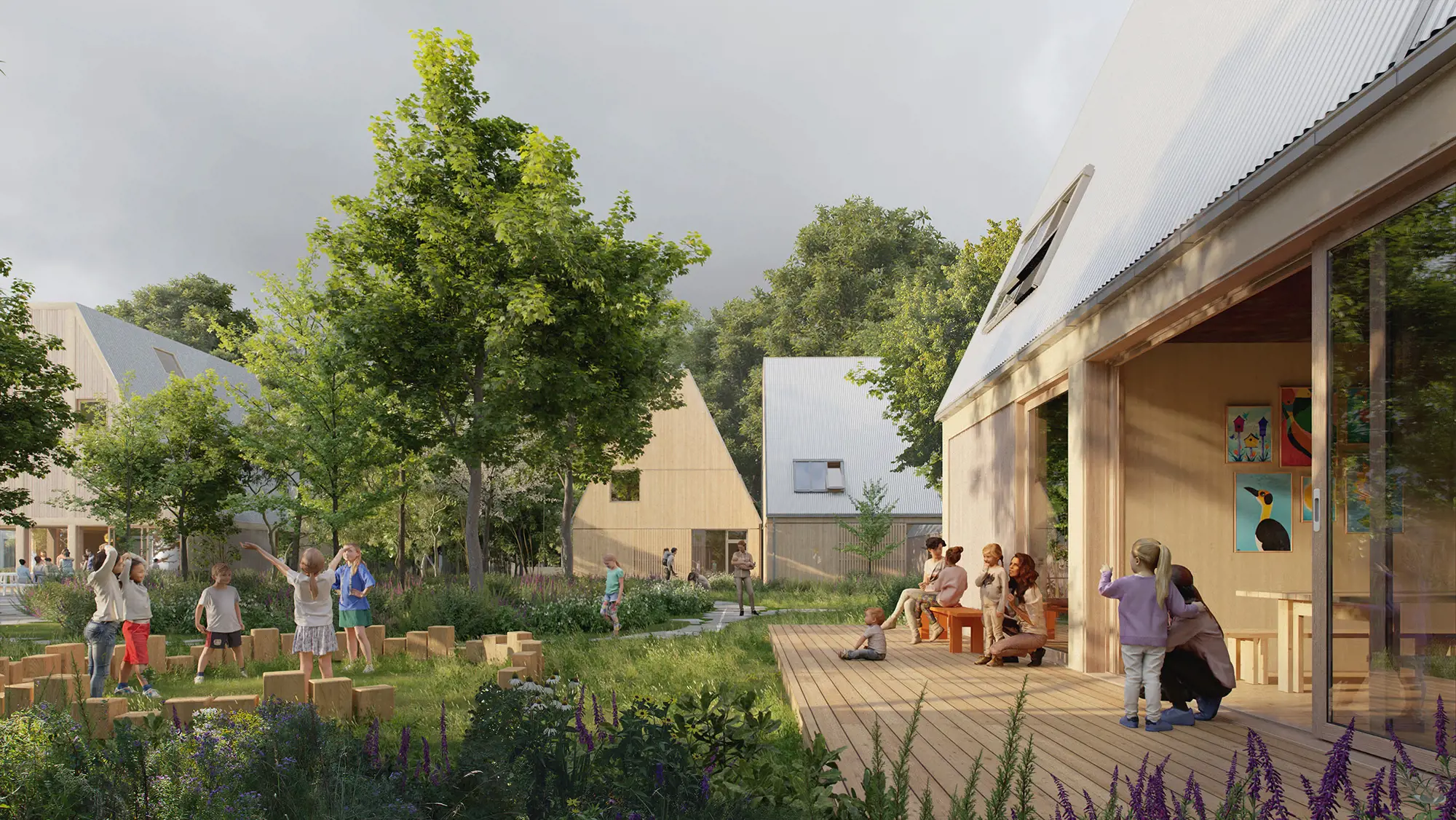
A housing initiative creating safe, family‑based environments for children, offering an alternative to institutional care. Developed in collaboration between SOS Children’s Villages and the VELUX Group.

The Netherlands
SMÛK House
A prototype home demonstrating how the Living Places principles can be applied at scale in the Netherlands. Developed in collaboration between the VELUX Group and Dutch builder Bouwgroep Dijkstra Draisma.

Denmark
LEV Huset
A forward-looking housing concept that rethinks how we live in dense cities by combining compact homes with shared spaces. LEV Huset shows how flexible, resource-efficient design can support different lifestyles while improving quality of life, strengthening community, and making better use of limited urban space.
A new approach to partnerships
The implementation of knowledge from Living Places takes place through pioneering partners in the building industry who have the courage to push the building industry beyond its comfort zone.
Scaling the concept to different locations, contexts, and configurations is intended as a ripple effect and an opportunity for significant changes in the building industry. Knowledge is shared through mutual partner agreements, where the involved parties benefit and learn from the collaborative process that takes place.
The partners collaborating with VELUX are investors, developers, contractors, and housebuilders who demonstrate a willingness to change, an innovative mindset, courage, and the necessary competencies to lead the transition to new standards for buildings.

Denmark
HusCompagniet
A collaboration focused on building high-quality, energy-efficient homes at scale. Together with HusCompagniet, we explore how standardized housing solutions can integrate better daylight, indoor comfort, and sustainability, demonstrating how large-volume construction can support healthier living environments.

United Kingdom
igloo Regeneration
A partnership centered on regenerative development and community-focused design. With Igloo Regeneration, we explore how buildings can go beyond sustainability by creating positive environmental and social impact, combining daylight, low-carbon solutions, and inclusive urban living.

Denmark
domea.dk
A collaboration with a leading non-profit housing organization to improve social and affordable housing. Together with domea.dk, we showcase how simple renovation and daylight strategies can enhance indoor comfort, energy performance, and quality of life for residents at scale.

United States of America
Habitat for Humanity of York County
A collaboration focused on delivering affordable, healthy homes for communities in need. Together with Habitat for Humanity of York County, we demonstrate how simple, cost-effective daylight and ventilation solutions can improve living conditions, supporting wellbeing and energy efficiency in accessible housing projects.

Denmark
Thylander
A partnership exploring innovative urban development with a focus on sustainability and long-term value. With Thylander, we demonstrate how real estate projects can integrate daylight, wellbeing, and resource efficiency, contributing to more resilient and attractive living environments.
The Ripple Effect
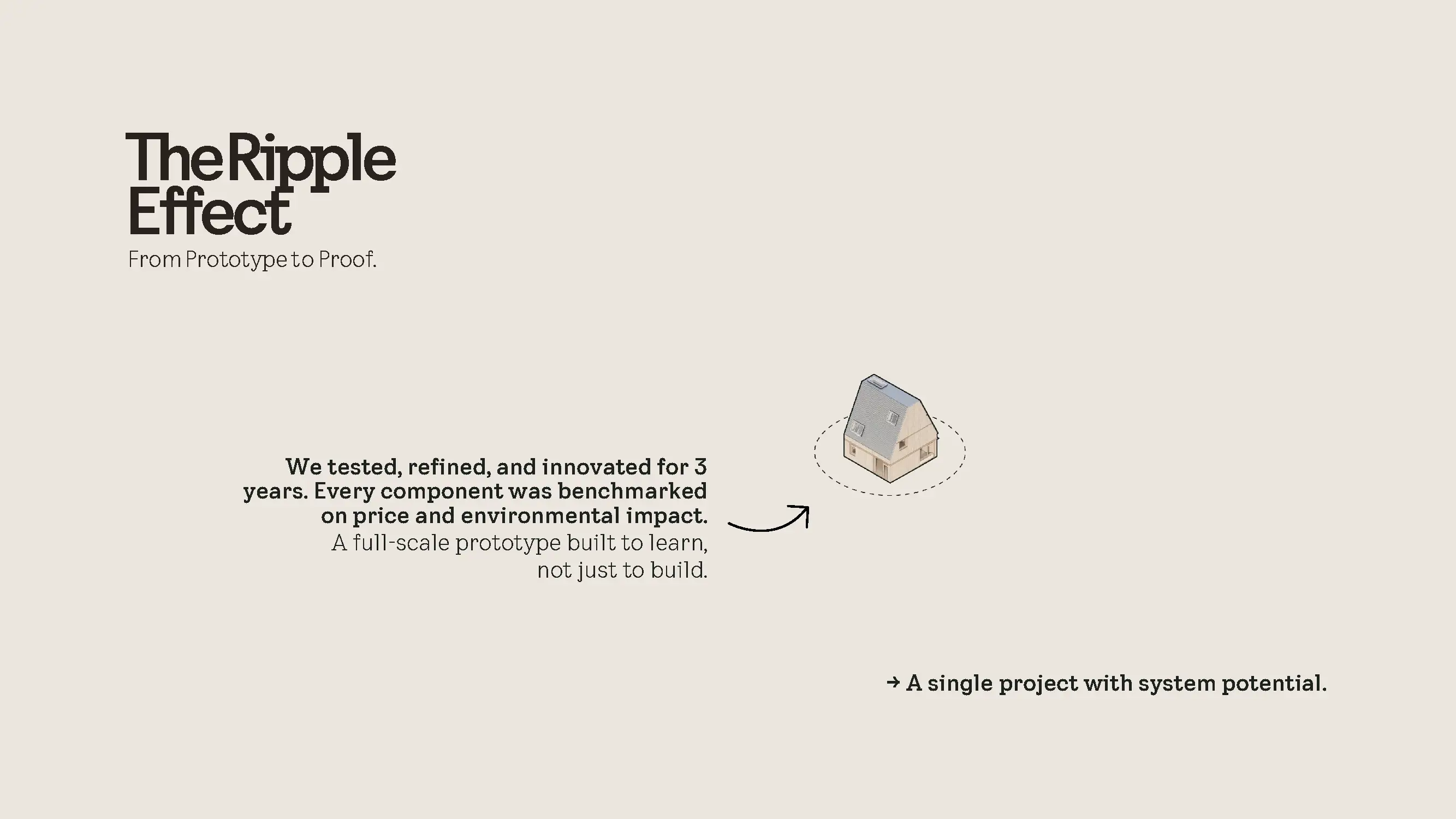
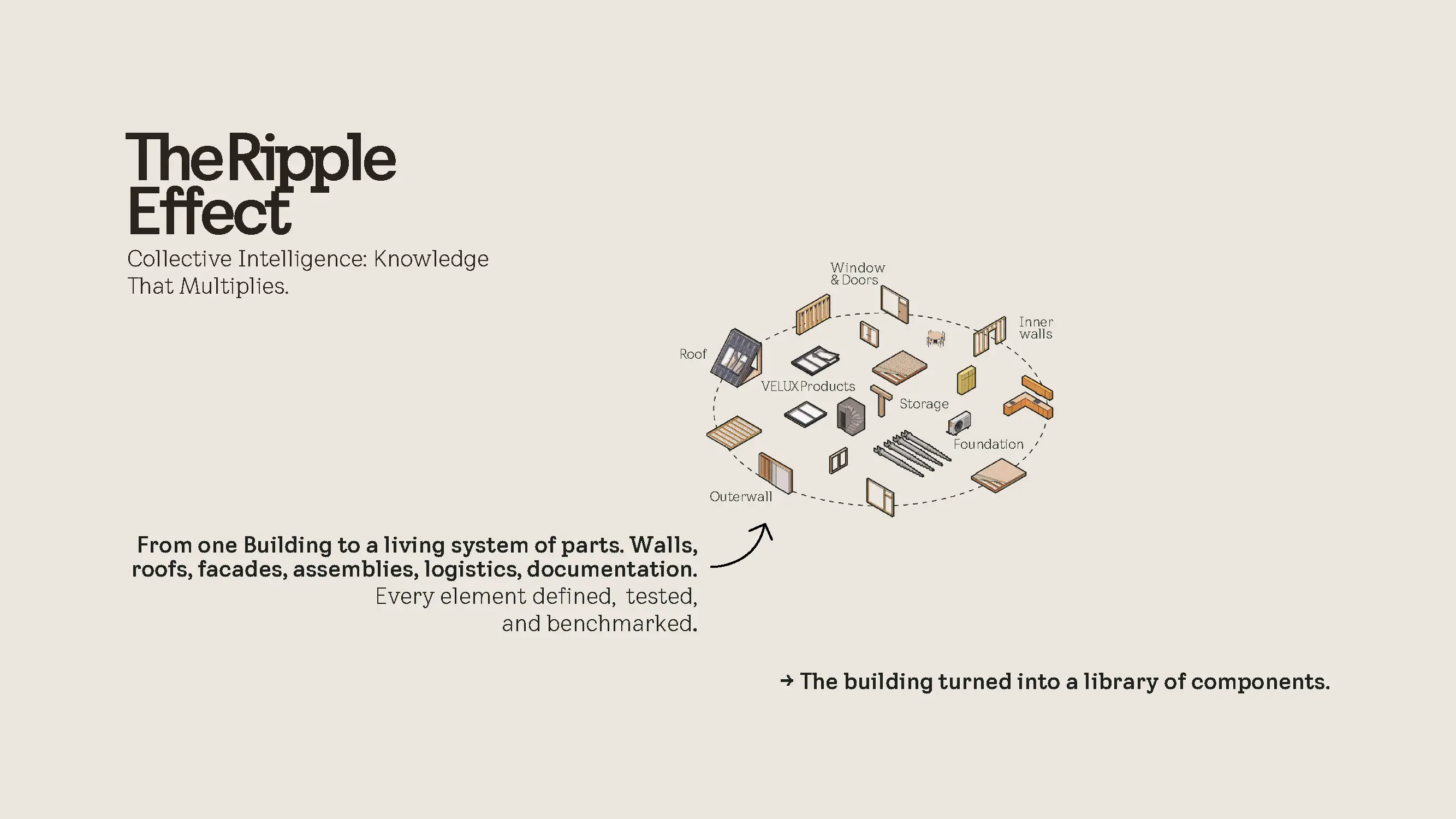
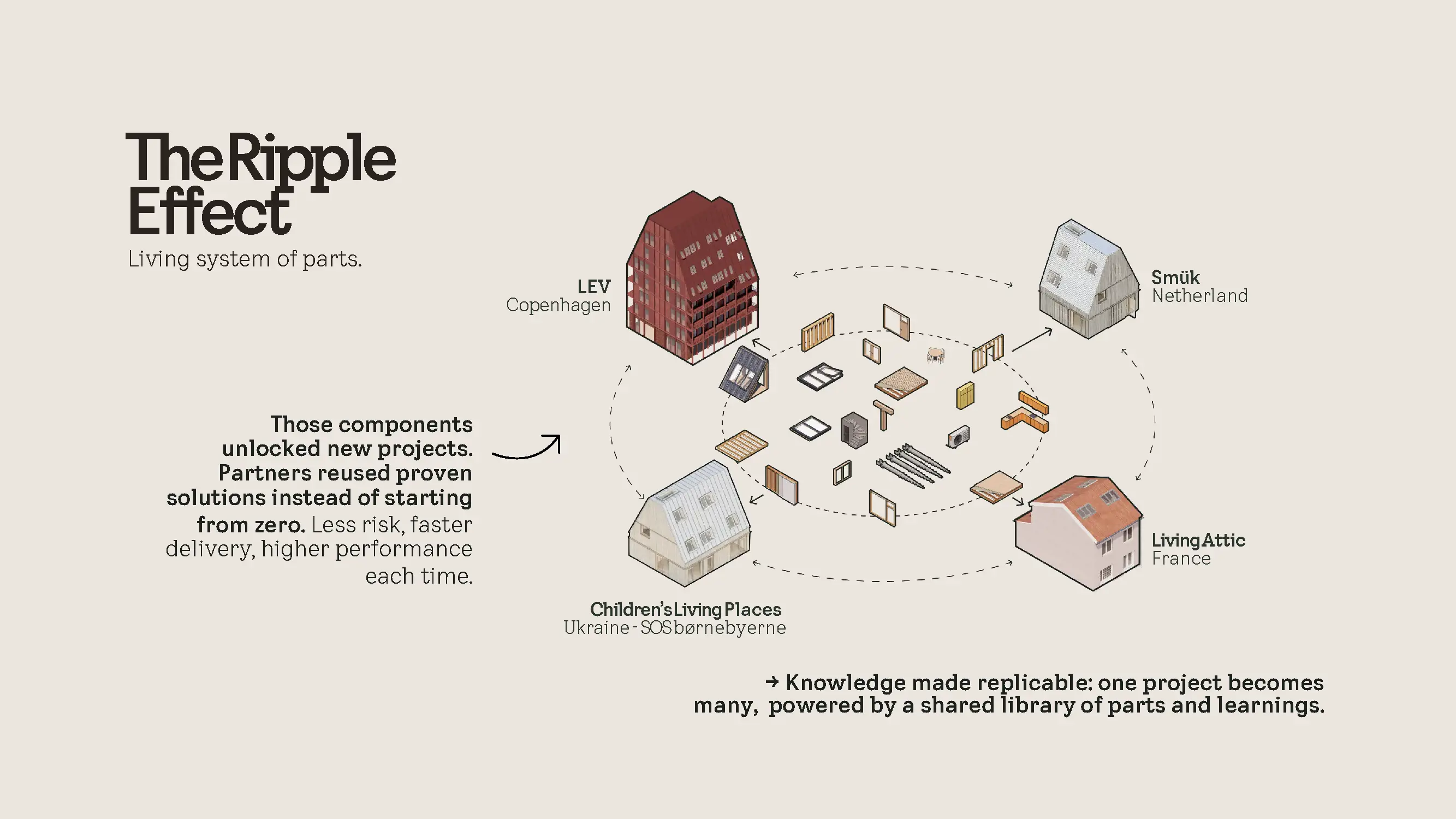
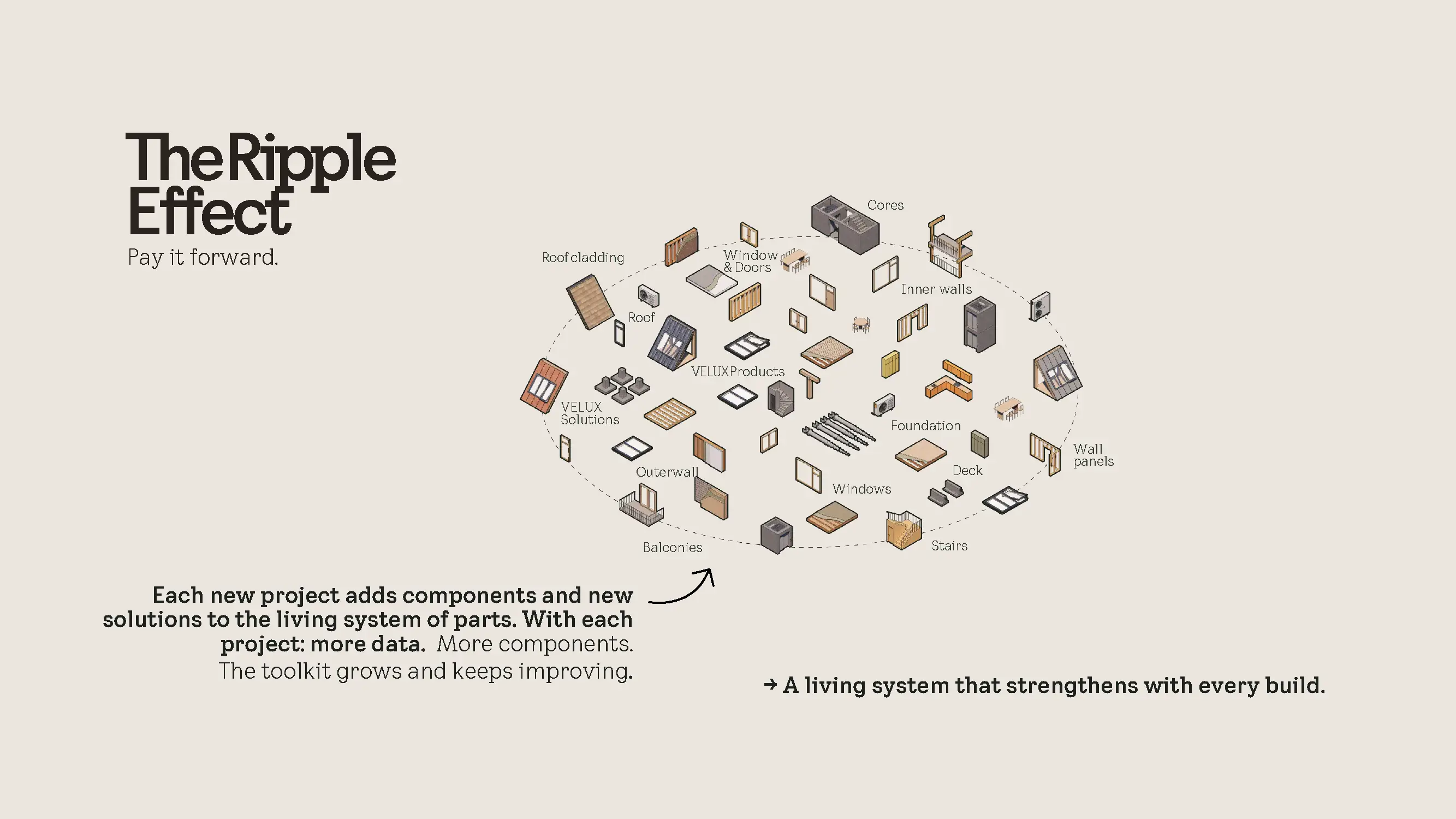
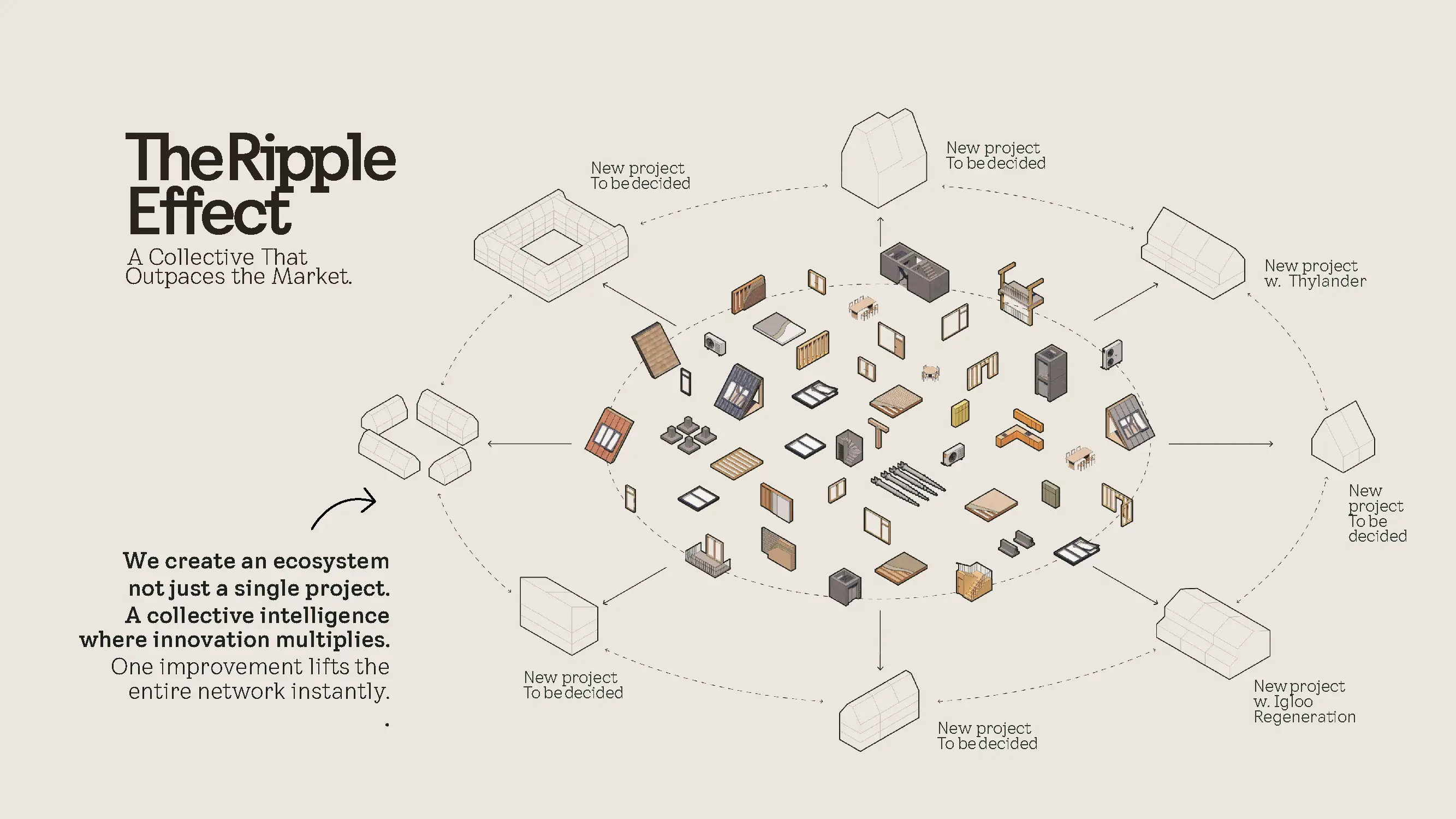
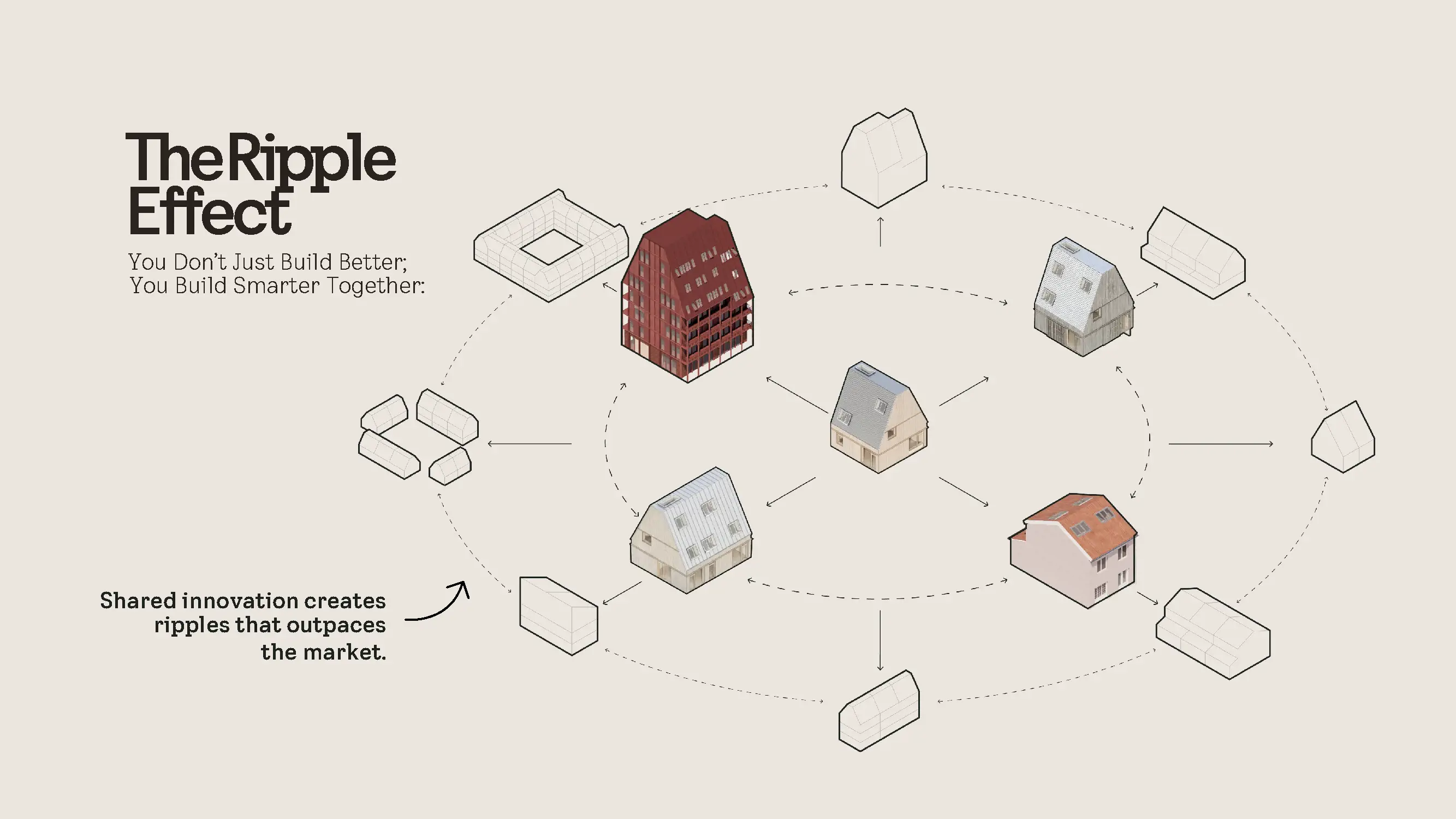
Illustrations by no objectives
Flexible and scalable concept
For Living Places to be truly impactful, it needs to be scaled. Every iteration of Living Places will unfold the concept’s building principles, yet allow for the partner to adapt to contextual needs, like site specifics, house design or family constellations to shape the project.
Think of it as a system which can expand, shrink or multiply, without compromising the vision and integrity. This flexible approach makes it easier to scale, enabling a building system that spans from suburban to urban environments and from new built to adaptive reuse.
Our approach centres on modularity, allowing for versatile building configurations in rows or courtyards with scalable heights. This modular design, adaptable for structures from 2 to 5 floors, focuses on optimizing Life Cycle Assessment (LCA) and cost-effectiveness.
The choice to limit buildings to a maximum of 5 floors is strategic, adhering to simpler fire regulations to achieve a balance between low environmental impact and affordability.
The principles of Living Places such as health, sharing, simplicity, adaptability, and scalability guide the development of buildings while utilizing data benchmarks to measure the impact of building practices on both people and the planet. The approach involves using tools like Life Cycle Assessment (LCA) and the Active House Radar to evaluate environmental impact and indoor environmental quality.
Living Places Principles
Healthy
Benefiting both people and planet, through the careful selection of materials, building techniques, utilities, and design configuration of indoor and outdoor spaces.
Shared
Strengthening the sense of community by combining private dwellings with shared spaces, resources, outdoor areas, and amenities.
Simple
Offering a simple modular building system that requires little to no maintenance and can easily be upgraded, repaired and fitted with smart appliances.
Adaptive
Creating a scalable solution that responds to the needs for more ways of living.
Scalable
By creating homes that challenge the way we design, plan, and finance homes we can unlock housing for the many.